The Handmaid’s tale is a story
about women named Offred living in this dystopian world where this world follows an extreme and militarized version of religion based on the Old
Testament. There was this big attack that killed major political leaders and a
new form of government took over, the Republic of Gilead. In this book, women
are very much oppressed. They aren’t allowed to read/write, speak to men, or
have jobs. They are forced to cover their faces with “wings” that limit their
peripheral vision. They wear long red dressed to hide their body shape. They
have to walk around the town in two’s and even still, they can’t really go
anywhere. These women are only working as handmaid’s because they can still
bear children. Because of pollution, most of the population is infertile. They
then give the children to the rich. Her own child was taken away from her and
given to another family. Also, the readers never learn her real name. She is
reduced to being a womb with the slave name Offred. It is honestly kind of hard
to compare her story to women today. In her world, their country was taken over
by an uprising. This story is more of a philosophical dystopian novel rather
than philosophy that we can compare to
the everyday lives of women. I really enjoyed this book as a dystopian story
with some elements of feminism, but I would not recommend this for women who
want to read a feminist novel.
Wednesday, May 30, 2018

Listen Up: a review
In Barbara Findlen’s book, Listen Up: voices from the next feminist generation, Findlen combines multiple essays from different young feminists to give an insight into the multiplicity and complexity of womanhood. Many of the feminist writers she sources come from different backgrounds. There are essays from writers with experiences with race and ethnicity, sexuality, sexual violence, and the workplace. Similarly, she includes essays about beauty standards, religion, diversity, tradition, and politics. Findlen uses this combination of essays to allow young feminists to have a voice and a way to express themselves within the world. Barbara Findlen’s Listen Up: voices from the next feminist generation must be read by anyone who considers themselves a feminist. Barbara Findlen examines feminism throughout time and realizes, “we do not yet live in a society where each child is free to become his or her best self. This is our unfinished business” (Findlen xvii). For each young feminist out there who does not feel that they are represented within the media or the feminist movement, Listen Up is a great read. The book is controversial and non-traditional, which suits the new wave feminists and the modern feminist movement in America. Personally, when I read the book, while I could not finish the entire thing, I found myself wanting to stop time and read more. The essays were shocking and controversial and talked about all of the things school has taught me not to talk about. If you consider yourself a feminist, if you want to read something refreshing and different, read Listen Up.
Herland is not our land
Book
Review by Luciano Ferrato
Herland,
written by Charlotte Perkins Gilman, is a masterful combination of a utopian
sci-fi novel where she distinctly grapples with the idea of a true utopia only
containing women. From the first page I am enthralled by the instant imagery of
a lost land that resists documentation. Three main characters, Van, Terry, and
Jeff, travel to a utopia of athletic, intelligent, and understanding women.
There, they come to question the fashion in which their own society functions
and its tolerances of inequality, disease, and hate. From the first chapter the
men’s callous stereotypical conjecture of “that country-if there was one—was
just blossoming with roses and babies and canaries and tidies…[or] a sort of
sublimed summer resort—just Girls and Girls and Girls” (Gilman 133). Gilman’s
language engrosses me as she creates a realistic dialogue that carries the tone
of man’s stereotypical presumptions and ignorance of a female society. In the
presence of equality, the male characters societal standards and beliefs
discredit their character highlighting man’s flaws. Gilman challenges the
societal beliefs and perception of women as subservient to men, their naïve lesser,
weaker, and dependent on their strength and insight through a direct and
meticulous comparison through a reality that explores women’s full potential. Gilman’s
novel is a highlight of my readings this year for its twist on traditional
utopian novels and the societal connotations concerning the oppression of women
and their potential when free from constrains of cultural marginalization and
subservience to men. This novel is a necessary read for those who wish to
inspect the culture we live in and question the putrid facets of our society
and why we tolerate them. Its exploration of stigmas and stereotypes affiliated
with women is perfect for those delving into their own beliefs and looking at
their origins and potential implicit unjustness. Overall, this is a wonderful
novel, stimulating the brain and imagination alike through its provocative
suggestions. It is easily imaginable through its meticulous and vivid language transpiring
into a cognitive feast for the brain and an evocative novel for women, men, and
others alike.
Works Cited
Gilman, Charlotte Perkins. The Yellow Wallpaper and Other
Writings. Random House Publishing Group, 2000.
Bad Feminist Review
Roxanne Gay’s novel, Bad Feminist, is a collection of essays
that address an incredible incite on not only feminism, but also intersectionality
in the United States. This is not just another analytical book about how the
male species suck and women rule, but rather her own experience of being a
woman in our society. Gay dives into her own experiences with feminism and intersectionality
throughout her life as not only a woman, but also a woman of color in her collection
of essays. She uses humor, irony, pop culture references, empathy, compassion,
you name it. Gay’s personality shines through these essays, with a voice that is
both relatable and refreshing. She embraces the ‘Bad Feminist’ label given to
her and rolls with it, as she talks about herself, gender and sexuality, race
and entertainment, politics, gender, and race, and concludes with herself once
again. She opens the book with an introduction on feminism, and states, “The
cultural climate is shifting, particularly for women as we contend with the
retrenchment of reproductive freedom, the persistence of rape culture, and the
flawed if not damaging representations of women we’re consuming in music,
movies, and literature,” (Gay ix). She dives into how the media depicts women
in such a negative manner, rarely getting the attention or opportunities to
matter. In her first chapter, she talks about online dating, to who is depicted
in the media, to her experiences as an adviser of the black student
association. She touches on issues people get too afraid to bring light to,
which is the only way we will be able to fix the inherent issues within our
society. She talks about how white men become defensive after pointing out
their inherent privilege. Those with privilege should understand and
acknowledge that they have privilege, according to Gay. They should be aware of
their social, political, and economical privileges, whilst also realizing that
there are people who are different from them and have experienced something they
will never be able to understand. Gay also brings light to what it means to be
human. In her essay, Not Here to Make
Friends, she talks about as a child; she was seen as mean and aggressive
for speaking what is on her mind. “[She] was being honest (admittedly, without
tact), and [she] was being human. It is either a blessing or a curse that those
are rarely likeable qualities in a woman,” (Gay 84). It is understood in our
society that when a girl is unlikeable, she is the problem. In the media, women
will declare, “I’m not here to make friends,” in order to establish that they
are only here to do what they need to do in order to win whatever award, man,
or exposure they need to give them however much fame they want. They are
freeing themselves from the chains of society and likeability, and there is
nothing wrong with that.
You do not have to be a
feminist to read this book. In fact, everyone should read this book, because it is a modern collection of essays
written by a woman that touches on issues people are too afraid to talk about,
with a sense of humor and intimacy. The book is thought provoking and addresses
a story of identity, coming from a woman of color in our society today. This
book can give insight on what it means to be a human, a woman, and a person of
color in our society today.
Tuesday, May 29, 2018
Wide Sargasso Sea Book Review
~ Wide Sargasso Sea ~
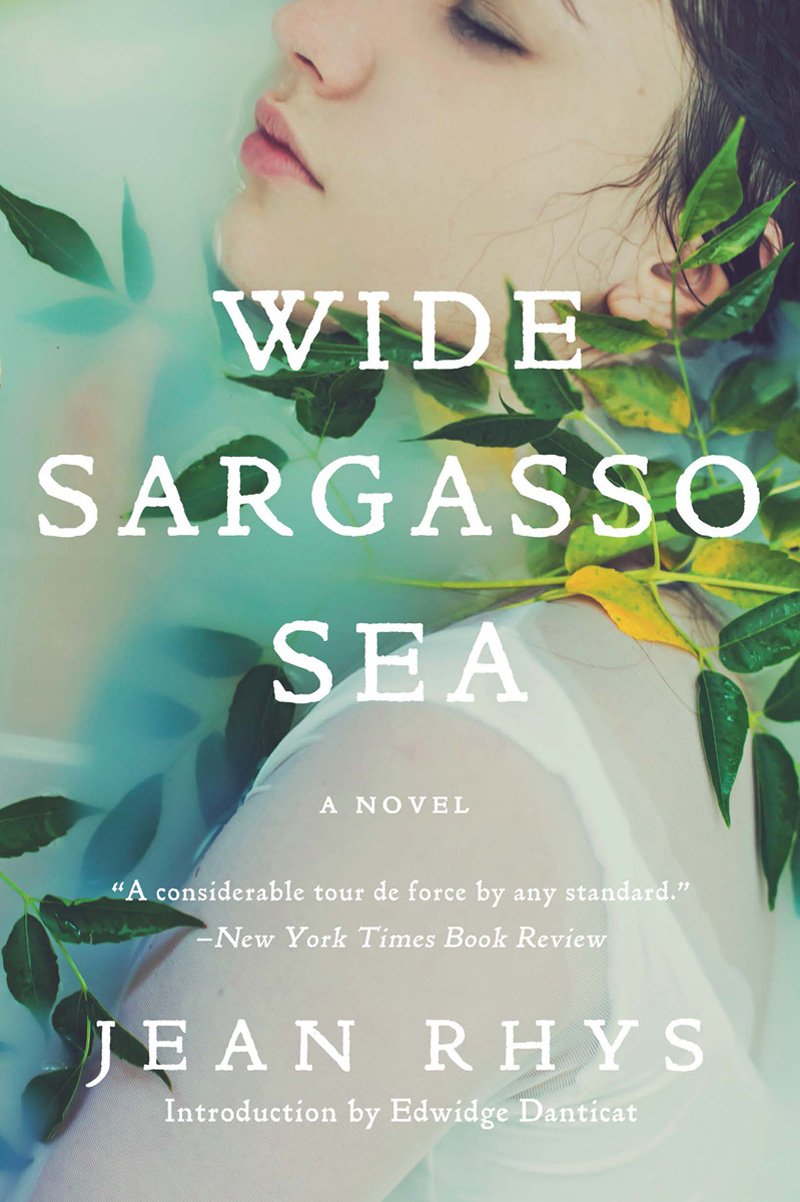
Our world today faces many problems and it seems that sometimes, the best way to inform people about these problems is through literature. Throughout our intensive, In the Footsteps of Seneca Falls, we learned that even a one-stanza poem by Emily Dickinson could have the same amount of hidden meanings and important messages as an actual book.
Novels like Wide Sargasso Sea are important to read because they give us context about problems from the past and ones that are prevalent in the society we live in. Wide Sargasso Sea is about the life of a Creole girl named Antoinette Cosway who lives near Spanish Town in Jamaica. Antoinette’s mother, Annette, decides to marry a man because their estate is very rundown and the family is in dire need of money. Marrying for financial support and stability was a commonly discussed topic throughout our intensive and is an important part of the history of women and our fight to gain equality. However, it is very difficult to be equal to men and remain financially stable when you are limited to working in your own house.
The novel also focusses on the effect that a person’s race can have on their life. Throughout Antoinette’s childhood, people taunt and criticize her because she is Creole and because her now deceased father was a slave owner. Antoinette is even made fun of by one of her playmates named Tia who ends up calling Antoinette a racial slur, steals Antoinette’s fancier dress when she is in a pool, and then Tia leaves her dingy dress for Antoinette to wear home. She also faces criticism when she is walking home because other children follow her and call her a “white cockroach”. Unfortunately, this is just the tip of the iceberg for Antoinette.
The threats and criticism continue to worsen until the villagers build up so much hatred that they decide to set Coulibri, her family’s estate, on fire. As a result, her brother dies and Mr. Mason, Antoinette’s stepfather, isolates her mother because he thinks she has gone mad, by sending her to an island to be cared for by people of color. Therefore, Antoinette lives in a convent for a year and then with her Aunt Cora until she marries a man that her stepfather picks for her which brings us back to the role that many women played in society because Antoinette’s stepfather signs over all of her wealth to her husband so that he will marry her. Their marriage is very complicated, lustful, and scandalous because Mr. Rochester, her husband, cheats on Antoinette with a maid in order to get back at her because she had a spell cast on him in hopes for an improvement in their marriage.
Mr. Rochester ends up forcing Antoinette to move to England and isolates her on the top floor of their new house, which is almost a direct parallel to her mother’s situation when Mr. Mason sends Annette away. Antoinette decides to take her life into her own hands for once and… Read the book to find out!!! :)
You should read the book to read about what happens to Antoinette and to read about the societal problems of racism, sexism, and much more that Antoinette and many other women are forced to face on a daily basis. Even though we can never fully understand something until we experience it ourselves, it is important to read stories like this about oppression so that we can reflect upon them and create change throughout the world.
Ms. Marvel: No Normal Comic Book Review
For this course, I
read the Marvel graphic novel Ms. Marvel: No Normal, written by G. Willow
Wilson and illustrated by Adrian Alphona. The book centers around Kamala Khan,
a Muslim girl living in Jersey City whose parents are Pakistani immigrants.
Kamala loves Marvel superheroes, so when Captain America, Iron Man, and Captain
Marvel visit her, she is in awe. When Kamala herself acquires some superhero
characteristics, she is excited, but also unsure of how to use her new powers.
Kamala feels caught between her identity as a high school student with
overprotective parents and her superhero alter-ego, Ms. Marvel. She eventually
decides to help her best friend Bruno save his brother, Vick, from the evil
Inventor. The book is the first in a series, so I'm excited to continue
following Kamala and her adventures as Ms. Marvel.
I don't normally
read graphic novels or comic books, but Kamala's story appealed to me because
she doesn't fit into the stereotypical superhero mold. I think it's great that
Marvel is trying to diversify its superheroes, and making Kamala a Muslim
Pakistani-American high school student is a fascinating example of
intersectionality. I love how the comic fearlessly explores topics like gender,
race, and religion through Kamala's point of view. I even found myself laughing
over some of the experiences she has as a high school student because I found
that I could often connect with her experiences. To me, Kamala is also a very
agreeable character, which made me excited to root for her and eager to read
more!
The Handmaid's Tale Book Review
The Handmaid’s Tale by Margaret Atwood is a chilling story about the intersection between religion and reproduction. In a country with alarmingly low birth rates, protagonist Offred lives in the Republic of Gilead as a Handmaid where her sole purpose as a woman is to reproduce children for the Commander whom she serves. In Gilead, women cannot have friendships, read, wear revealing clothing, and the color of their dresses signify their marital status. Sex is not pleasurable, but necessary merely for reproduction. Doctors and scientists who supported abortion before the war between Christian denominations are hanged in public to set an example. Ironically, the seemingly smooth change from a normal 1980s Western society to a mechanical, orthodox Catholic society prides on ridding the world of its disgusting sexual violence rates, despite perpetrating societal beliefs that a woman’s value as a human is based on her ability to have children. This is seen when Offred mentions that women who cannot reproduce are sent to the colonies as “Unwomen.” Throughout the book, this new society depicts disgusting scenes in which the “Aunts,” nuns who condition women into becoming silent, obedient Handmaids, reduce Handmaids-in-training to objects. For example, Aunt Helena places blame onto victims of rape, not the rapist, insisting that the victims "led them on” (Atwood 72). Therefore, God punishes women with rape to teach them a lesson.
As Offred reflects back to her old life with her husband and daughter in a free society, there is a haunting distinction between the freedoms of her old life compared to the restrictive, woman-hating society she lives in now. The way society shifts so plainly made me wonder just how easy it is for an entire country to change the way in which it functions, especially since other countries like Japan seemed to retain its ways in the book despite the war. Because today discussing topics such as victim blaming, toxic masculinity, and abortion has become normalized in my community, it is eye-opening to remember the Republic of Gilead is still the reality for many women in 2018. The Handmaid’s Tale painted a stark image of the role of women in religion who are always antagonized. In connection to the Seneca Falls intensive, the novel allowed the reader to step in the shoes of American women of the past before the suffrage movement through the perspective of Offred. I thoroughly enjoyed the 100 pages I read and would definitely recommend it to anyone who is interested in women's rights.
Subscribe to:
Posts (Atom)